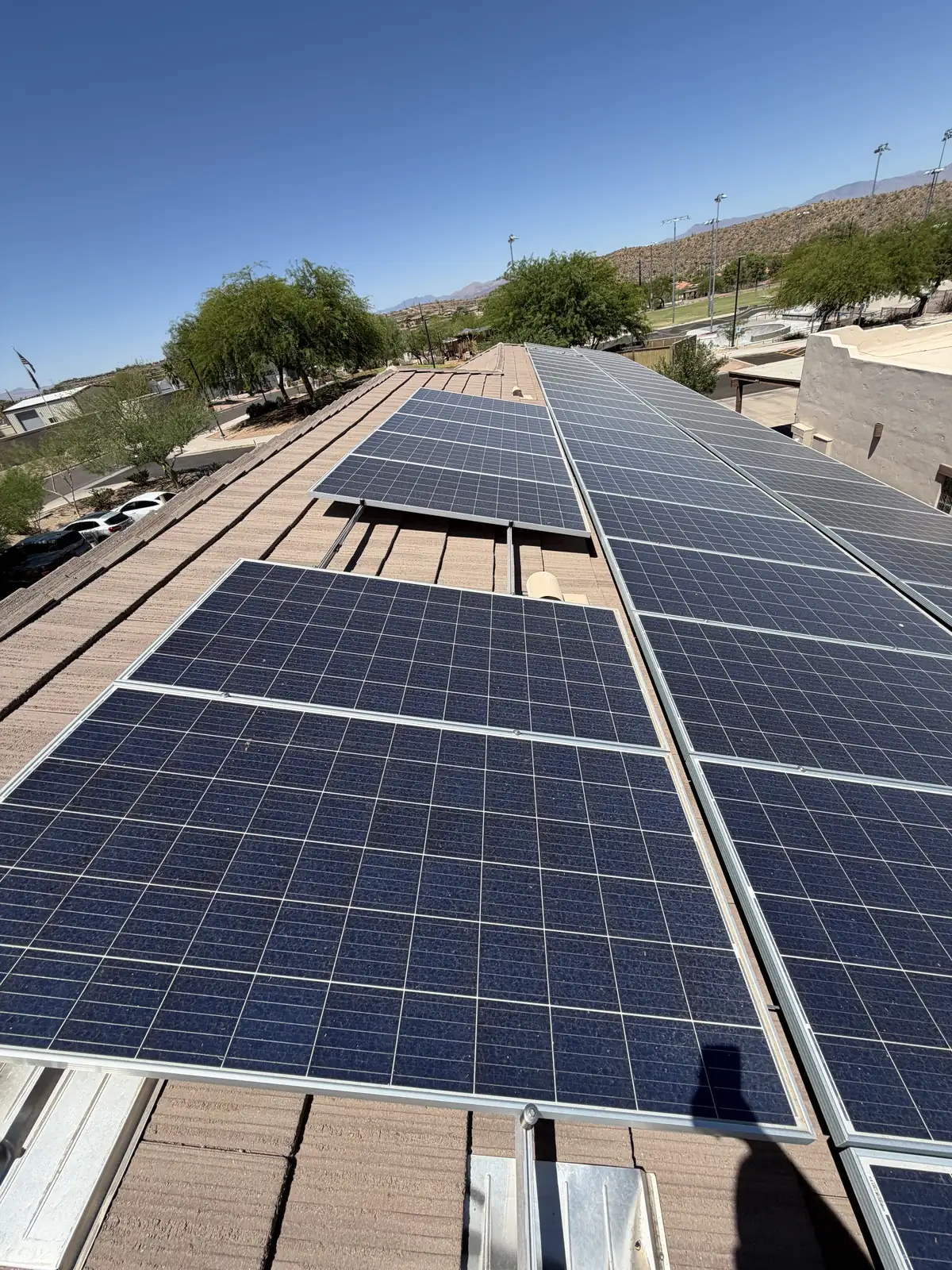
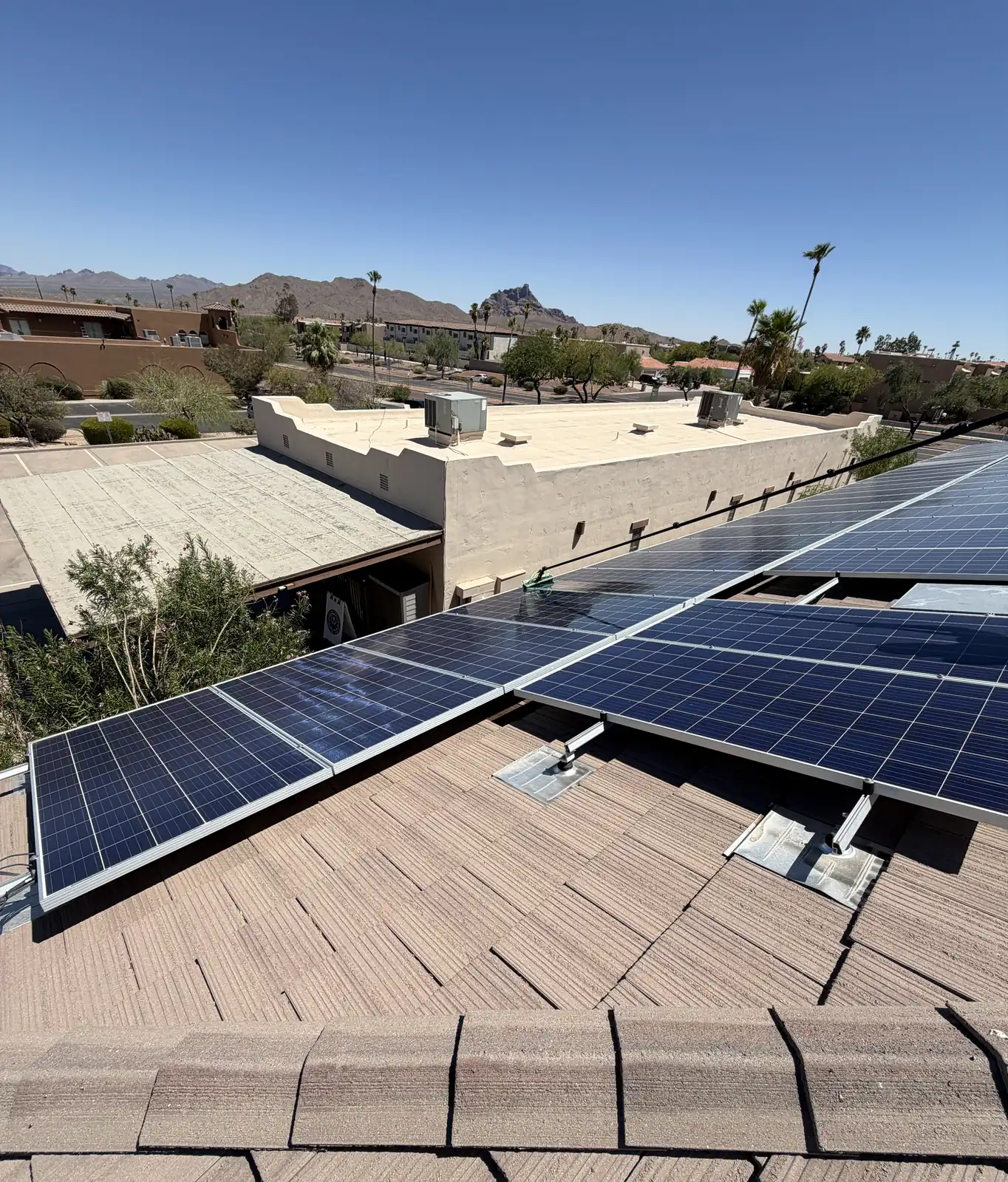
If the street photo does not show the array, that is normal
These houses are designed around Camelback or Mummy Mountain, not around a solar marketing shot. The modules end up on the slope that faces the sun and away from the motor court. Clearwater Hills and Cheney Estates put that slope on a grade. Finisterre does the same thing behind a gate, with a roof plan that changes house to house. A photo from Lincoln Drive, or from the gate at Paradise Valley Country Club, tells me nothing about module count.
I need a photo from the yard or from whatever window actually sees the array. Count is useful. Pitch is more useful. If the only way onto the roof is a drop over a view wall, I may clean from a water-fed pole or I may tell you the safe plan is different from the one you pictured. I would rather say that in the text than from a ridge.
Sanctuary Camelback Mountain Resort and El Chorro are landmarks people use so I know which side of the mountain they mean. They are not proof I can park a trailer at your entry. Zip 85253 covers most of town. Some edges share 85254. Distance is not the issue. Access is.
Big systems make a dirty month easier to feel
I am not going to hand you a made-up percentage. A larger array does not get dirtier because it is large. It makes the same soil easier to notice, because the house was counting on that output. Dust off the slope, pollen, and the film a west wind leaves on the lower row all sit between the sun and the cell. Your monitoring app is the honest instrument. If the curve sags while the sky stays clear, the glass is a fair suspect.
Bird debris shows up where fairway water and mature trees meet the roof, more often on Camelback Country Club Estates and Casa Blanca than on a bare hillside in Clearwater Hills. It bakes on. I lift it. I do not scrub grit in a circle and call the smear a clean. Judson roofs are sometimes older retrofits, smaller and closer to the eave, with tile that has already been walked by someone else. I look before I add my weight to a cracked tile.
Hard water is the self-inflicted version. A hose bib in the service yard feels helpful at 7 a.m. By noon the minerals have spotted the glass, and those spots are not dust. Purified water is how I rinse so I am not trading dust for scale. If the spots from an earlier hose job have bonded, I will tell you. Coatings and glass get a gentle clean. I am not there to polish them with an abrasive.
Quiet scheduling, gates, and the other trades on the roof
Send the gate code in the first text. I do not follow a guest in, and I do not ask the house next door. If you want the visit while you are gone, say where the water is and whether a dog has the run of the side yard. I can work without an audience. I cannot work without a way onto the property.
If a roofer, a painter, or a stucco crew is on the house, I wait. Fresh dust from their work lands on wet modules and I have cleaned the array twice, the second time at a new price. Tell me. The same goes for a window crew. Window cleaning can happen the same week. It should not happen while I am rinsing grit off the roof onto a slider that was just detailed. We order it, or we pick a day.
The motor court and the pool stone are pressure washing. I do not rinse an array and call the travertine done because water ran across it. Stucco dust on the walls is house washing. Three different tools. I will price more than one. I will not blend them into a single vague exterior number.
Service yards, equipment pads, and shade the view wall does not show
The useful door on a Paradise Valley solar visit is often the service yard, not the front gate you use for guests. That is where the spigot is, and it is where the inverter lives in the shade. I rinse modules. I do not open the inverter, tighten a lug, or diagnose a red light. If the equipment is alarming, send that note so I do not get blamed for a fault that was there before the glass was wet. If the service yard is locked separately from the main gate, I need that code too.
Shade is the quiet thief on these lots. A palo verde or a neighbor's tree has grown into the lower row since the install, especially on the flatter estates near the country club. Cleaning the dust does not move the shade. I will mention it if I see a branch on the glass. I will not trim it, and I will not let a shaded row change the price into a production guarantee. Clearwater Hills slopes do this less. Casa Blanca and the mature yards do it more.
Some houses have a small ground mount or a garage roof in addition to the main slope. The garage roof is usually the dirty one, because it sits lower and closer to the drive. Include it in the photo or it stays off the ticket. I would rather price a second face while we are texting than discover it after the hoses are packed.
What the text should contain
- Address, gate code, and which mountain the house faces if that helps the approach
- A photo that actually shows the modules, plus a rough count if you know it
- Tile or another roof, and anything steep over a drop
- A note if you have hosed them and now see spots
- Dog, water spigot, and whether you will be home
Text (623) 552-1425. I answer with one flat price, usually while the day is still going. If the photo hid a second array on the other slope, I reprice before I start the second one. The service overview is solar panel cleaning. The quote form takes the same photos.